The Origins of Chinese Characters
汉字的起源
Chinese characters are an ideographic writing system gradually created and accumulated by ancient Chinese people over thousands of years.
The Legend of Cangjie
According to ancient legend, Cangjie (仓颉), a historian of the Yellow Emperor, created Chinese characters by observing the tracks of birds and animals. When the characters were created, "grain rained from the sky and ghosts cried at night" — a testament to the profound impact of writing on human civilization.
Archaeological Evidence
The earliest known Chinese writing is the Oracle Bone Script (甲骨文) from the Shang Dynasty (c. 1600–1046 BCE). These inscriptions were carved on turtle shells and animal bones for divination purposes. Over 4,500 different characters have been identified, with about 1,500 successfully deciphered.
Evolution of Scripts
- Oracle Bone Script (甲骨文) — Shang Dynasty, earliest known form
- Bronze Script (金文) — Cast on bronze vessels during Zhou Dynasty
- Seal Script (篆书) — Standardized by Qin Dynasty
- Clerical Script (隶书) — Han Dynasty, more efficient writing
- Regular Script (楷书) — The standard form used today
- Running Script (行书) — Semi-cursive, practical and elegant
- Cursive Script (草书) — Artistic, expressive, and fluid
Calligraphy Gallery
Oracle Bone Script (甲骨文)
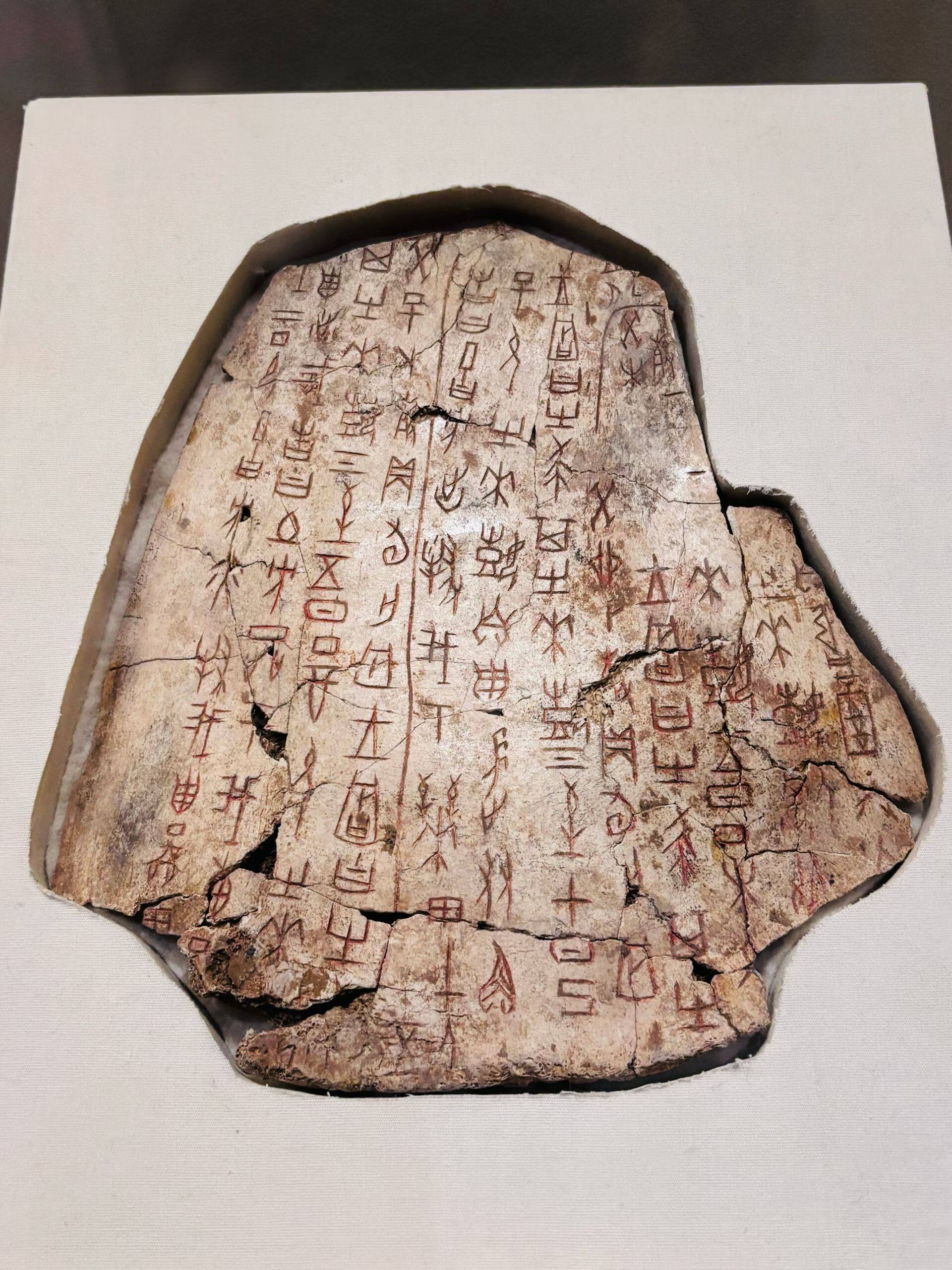
Oracle Bone Script is the earliest known form of Chinese writing, dating back to the Shang Dynasty (c. 1600–1046 BCE). These inscriptions were carved on turtle shells and animal bones for divination purposes.
Bronze Script (金文)
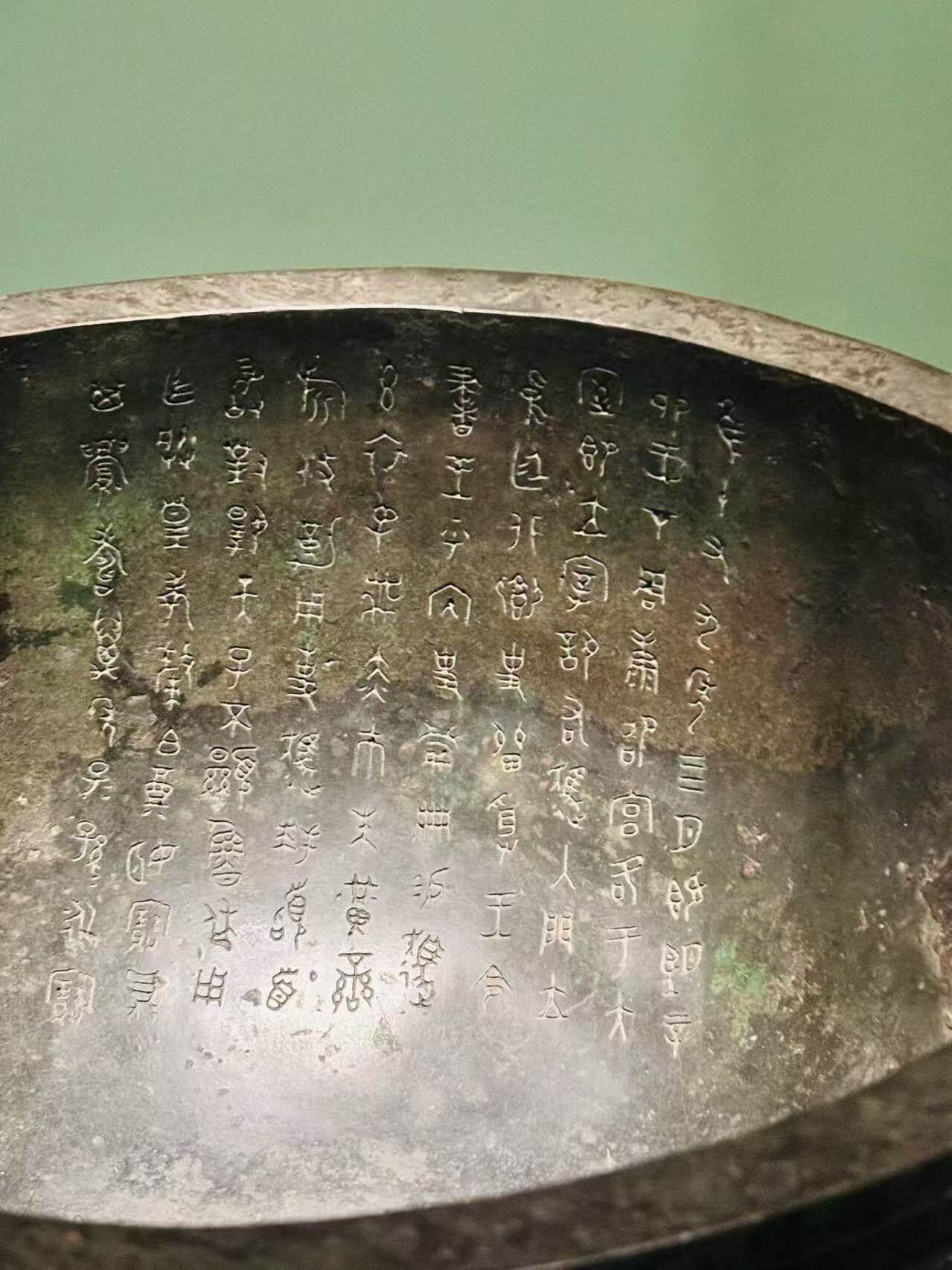
Bronze Script was cast on bronze vessels during the Zhou Dynasty (1046–256 BCE). These inscriptions recorded important events, royal decrees, and ancestral worship ceremonies.
Seal Script (篆书)
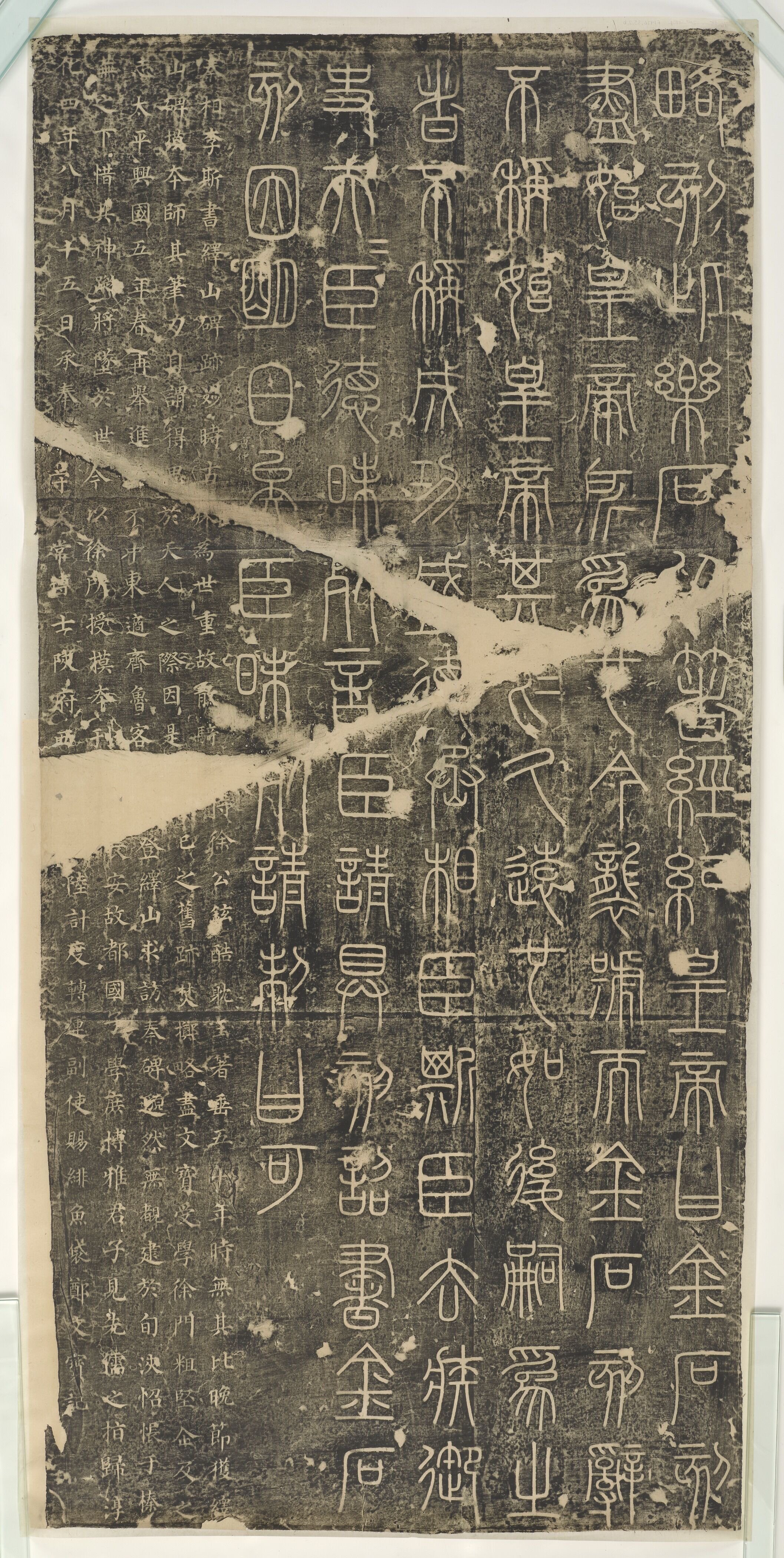
Qin Seal Script: After Qin Shi Huang unified China, one of the first tasks he undertook was the unification of the writing system, replacing the chaotic scripts of the six states with Small Seal Script (小篆). Small Seal Script marked the end of ancient Chinese scripts.
Clerical Script (隶书)
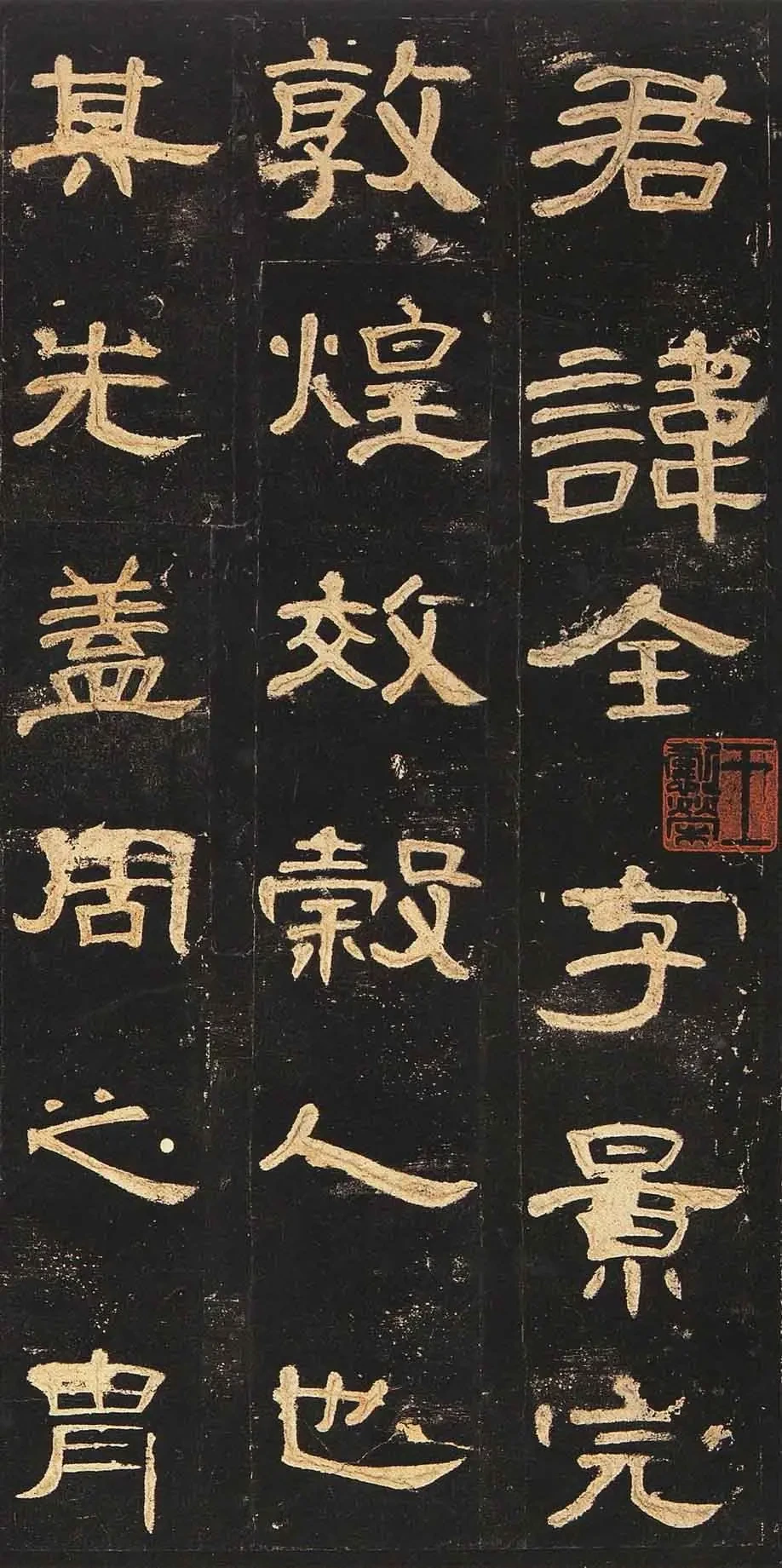
Clerical Script (隶书) emerged during the Han Dynasty (206 BCE – 220 CE) as the everyday brush writing of the Han people after the Qin, mainly written on bamboo and wooden slips and on silk. Its strokes run mainly horizontally, giving characters a broad, flat shape, with long horizontal strokes forming the "silkworm head and swallow tail" (蚕头燕尾) and the left and right sweeping strokes extending outward. It replaced the curved, rounded strokes of Seal Script with flatter, straighter and more angular forms, making writing simpler and quicker. Widely used on slips and official documents, it became a key turning point that gave rise to the Regular Script of today.
Running Script (行书)
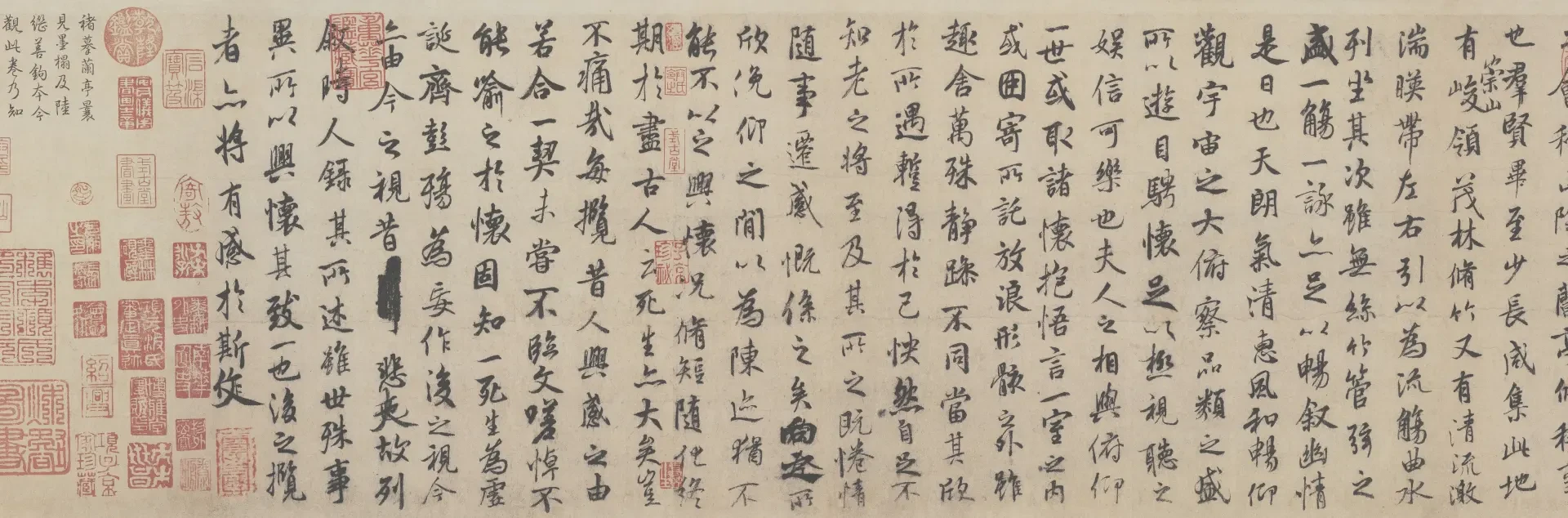
Running Script (行书) took shape in the late Eastern Han Dynasty, around the time Regular Script emerged, and it sits between Cursive Script and Regular Script. Its brushwork flows and strokes are linked together, and its form is less solemn and formal than Regular Script. It is simpler and quicker to write than Regular Script, yet easier to read than Cursive Script. Wang Xizhi's Preface to the Orchid Pavilion (兰亭序) is a highly celebrated example of Running Script in Chinese calligraphy.
Regular Script (楷书)
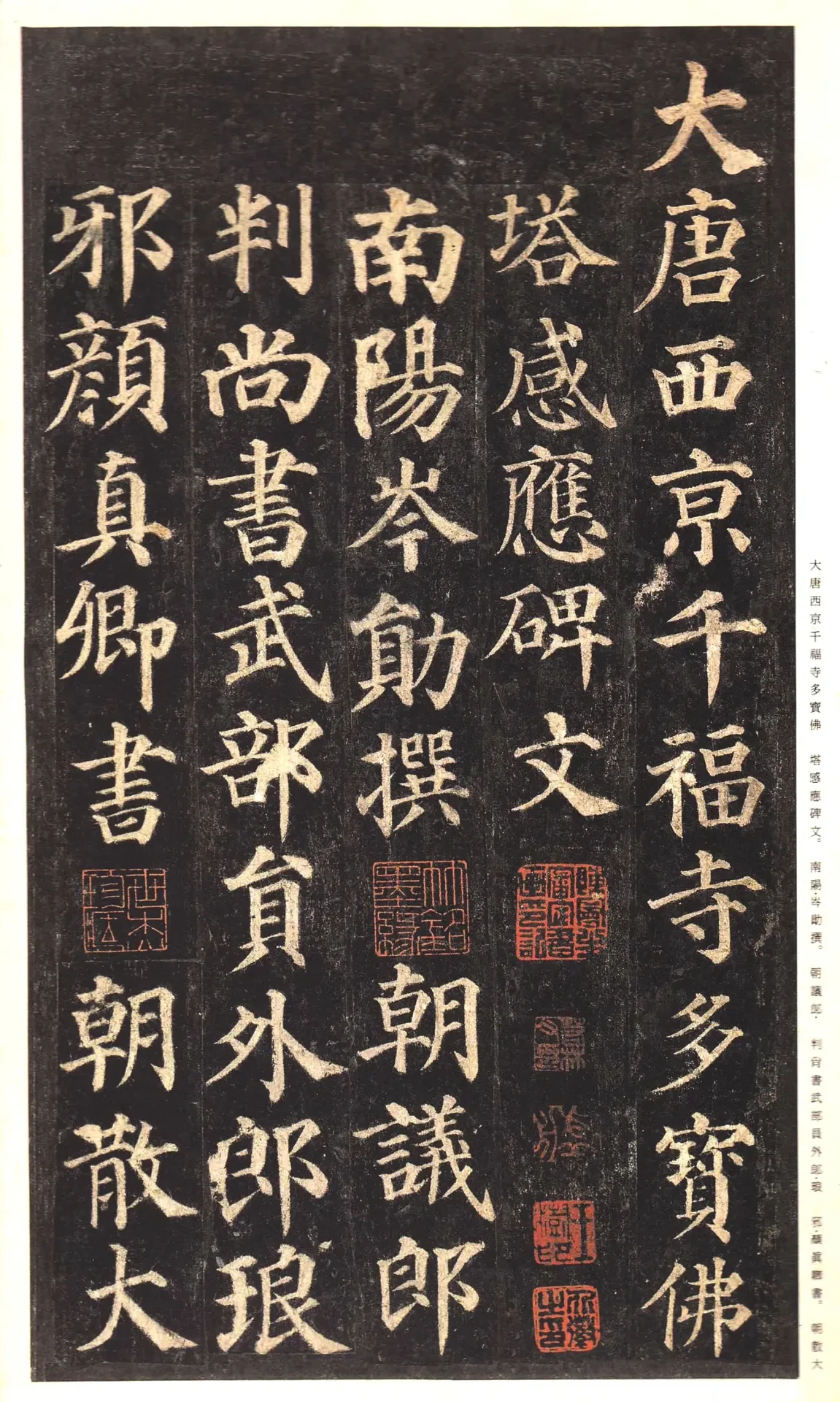
Regular Script (楷书) took shape in the late Han Dynasty and was fully established by the Tang Dynasty (618–907 CE). Its strokes are straight and clearly separated, and each character is written in a balanced, square structure, which makes it clear and easy to read. It remains the standard form for printing and everyday writing today, and masters such as Yan Zhenqing and Liu Gongquan are celebrated for their Regular Script.
Cursive Script (草书)
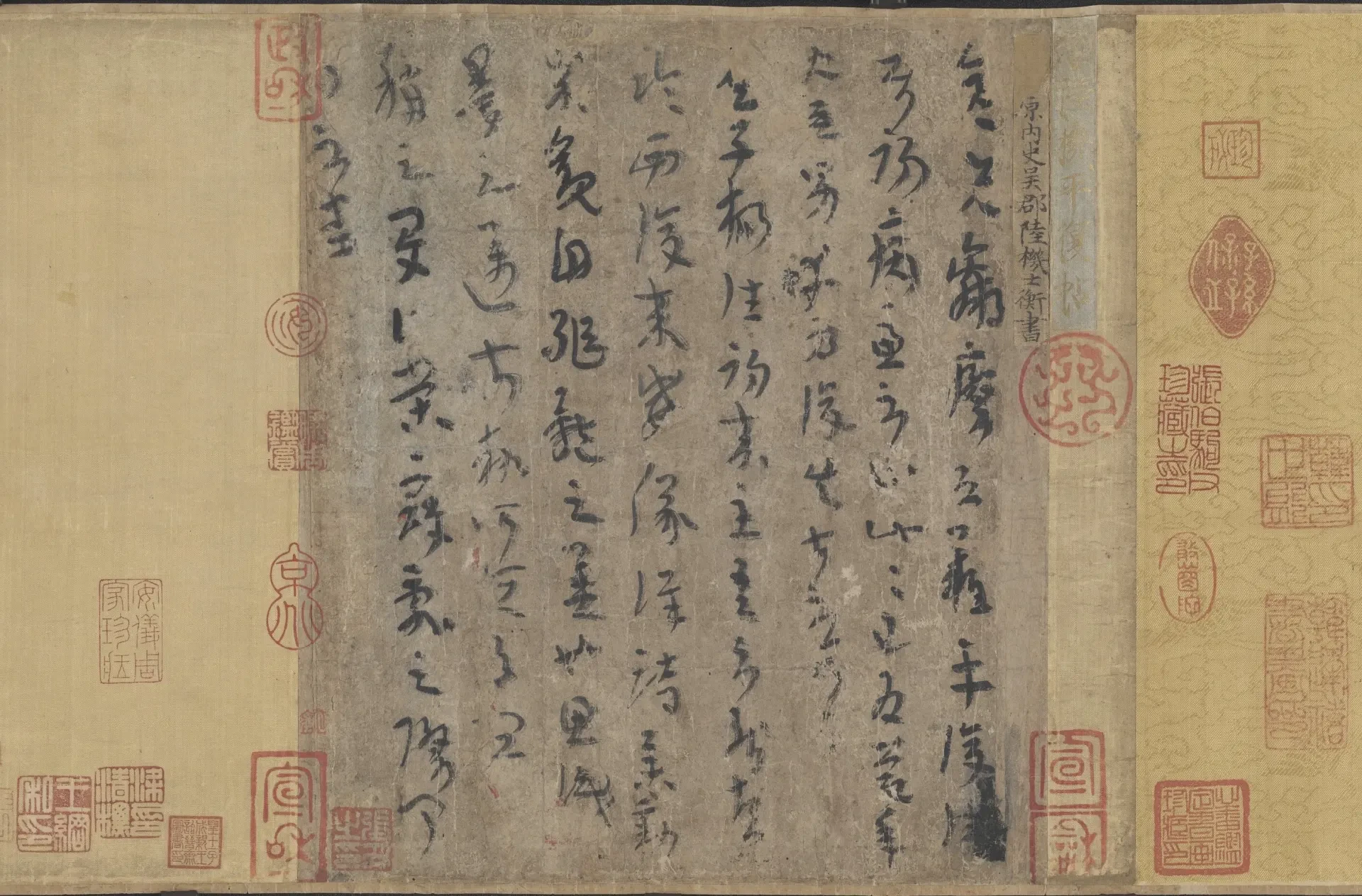
Cursive Script (草书) grew out of Clerical Script during the Han Dynasty as a fast, simplified way of writing. Its strokes flow and connect continuously, so characters are often reduced to bold, expressive lines that value rhythm and feeling over strict legibility. Later masters such as Zhang Xu and Huaisu turned Cursive Script into a highly personal art form, and it remains a strongly expressive style in Chinese calligraphy.
From ancient oracle bones to modern digital text, Chinese characters have carried the wisdom and culture of one of the world's oldest continuous civilizations.